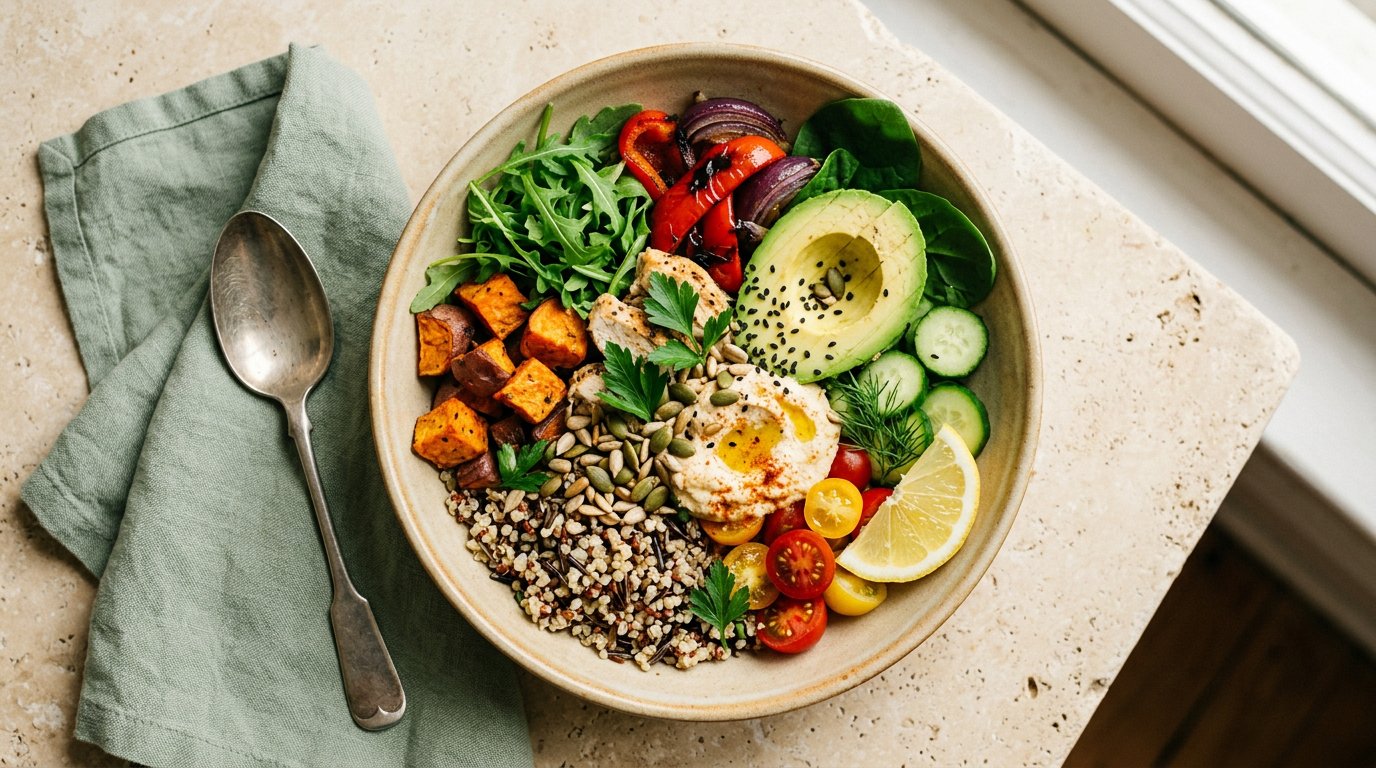
Balanced nutrition does not need to be built on strict rules, guilt, or the pursuit of a perfect plate. At its best, nourishment is flexible, satisfying, and responsive to your culture, preferences, budget, health needs, and daily routine.
A gentler approach shifts the question from “Was I good today?” to “What would help me feel supported and satisfied?” That simple change creates room for curiosity instead of criticism.
Think in terms of addition
Nutrition advice often emphasizes removal. While some people need specific restrictions for medical reasons, everyday balanced eating can begin by asking what might be added. Could a meal include a colorful vegetable, a satisfying protein, a source of fiber, or a little more water alongside it?
Adding variety can make meals more interesting and nourishing without turning eating into a rigid project.
Build satisfying, flexible meals
A satisfying meal often brings together different textures, flavors, and nutrients. Rather than chasing a fixed formula, use broad ideas as a guide and adapt them to foods you enjoy.
- Include a source of protein that feels satisfying and accessible.
- Welcome colorful fruits or vegetables in fresh, frozen, or cooked forms.
- Choose grains, starches, or other energy-giving foods that suit your appetite.
- Add flavor with herbs, spices, sauces, and fats that make the meal enjoyable.
Convenience foods can have a place in balanced eating. A simple meal you can realistically prepare is often more useful than an elaborate plan you cannot maintain.
Nourishment includes nutrients, but it also includes pleasure, culture, connection, and ease.
Listen for hunger and satisfaction
Busy schedules can make internal cues difficult to notice. When possible, pause before and during eating to consider your hunger, satisfaction, and comfort. There is no perfect response. The goal is simply to gather information without judgment.
Regular nourishment may help some people avoid becoming uncomfortably hungry. Others may have medical conditions, medications, or appetite changes that require individualized support. Your own needs deserve context, not comparison.
Make room for enjoyment
Food is part of celebrations, traditions, and connection. Enjoying a favorite food does not undo balanced eating. When all foods are approached with a sense of permission, it can become easier to make choices based on both nourishment and satisfaction.
If your relationship with food feels distressing or preoccupying, compassionate professional support can help. You deserve care that addresses both physical and emotional well-being.
Personal needs matter
General nutrition inspiration cannot account for allergies, medical conditions, medications, pregnancy, digestive concerns, or other individual circumstances. A qualified nutrition or healthcare professional can help you adapt broad principles safely.
Balanced nutrition is not about getting every meal exactly right. It is about creating a pattern of care that is varied, adequate, enjoyable, and workable for you.